Richard III’s DNA throws up infidelity surprise
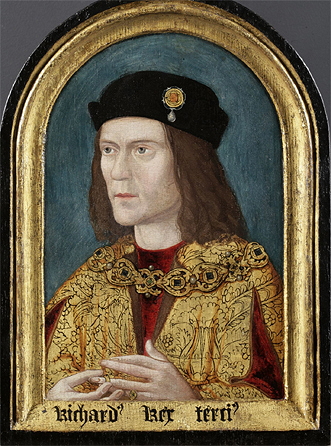
Analysis of DNA from Richard III has thrown up a surprise: evidence of infidelity in his family tree. Depending on where in the family tree it occurred, it could cast doubt on the Tudor claim to the English throne or, indeed, on Richard’s.
Read more here.
7 Questions to Make Sure Your Plot Has Believable Consequences
A great plot in your fiction novel must have believable consequences in the world you create there. Otherwise, your story falls off the deep end.
Read more here.
Hiding Chekhov’s gun
“Remove everything that has no relevance to the story. If you say in the first chapter that there is a rifle hanging on the wall, in the second or third chapter it absolutely must go off. If it’s not going to be fired, it shouldn’t be hanging there.”
-Anton Chekhov
While it’s important to both take out unnecessary elements and provide the readers with adequate foreshadowing, it can be hard to do so and still have plot twists and unpredictability.
Read more here.
Hi-tech schools rescuing an ancient language

Irish
Technology and education have a long, complicated and sometimes exaggerated relationship
Read more here.
How To Preach To Your Audience and Not Get Caught
Let’s establish one thing right now. Every story has a message. Every author has a bias. Every author has multiple biases. There’s no such thing as something that’s ‘Just A Story’. Anybody who says that clearly doesn’t understand the role that fiction plays in influencing us and our attitudes towards the world. Uncle Tom’s Cabin by Harriet Beecher Stowe helped start the Civil War, of all things.
Read more here.
The Novel Was THIS BIG — How to write a novel workshop
There are entire books devoted to writing a “big” novel, including books with names like “How to write a blockbuster novel.” This is not one of those books in post form.
Why is it not?
Read more here.
How to Write More Than You Ever Thought Possible

These are some tips you can use whenever you’re writing outside of NaNoWriMo, so keep them in mind if you want to write faster.
Read more here.
On worldbuilding, sequels and keeping it all straight | madgeniusclub
Read more here.
Another concert in Second Life
Tonight the whole family went to a Russell Eponym concert in Second Life.
This is my mom listening to the live music until she got ‘ants in her pants’ and wanted to leave.
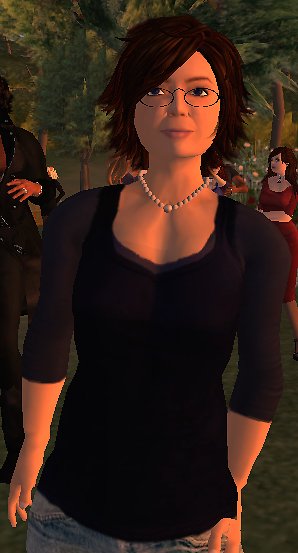
This is my sister and I, who were able to stay the whole concert:

My sister and I at the concert
Five centuries in this town

Old town

New town
On Thursday evening, I went to a lecture about this town’s history during five hundred years. As most of my followers know, I hate this town, so in a way, it’s odd that I wanted to go and listen to that. On the other hand, I also love history.
The guy who did the lecture works at the museum and he’s got a bit of a reputation (oddly enough, since he’s such an unimpressive character when you look at him – or listen to him), but it’s not about his personal life, I was going to tell you. Anyway, he performed well enough, as a lecturer.
The first ‘century’ (not quite a century) – the sixteenth – was actually before the town proper was founded, in fact before the earlier town too. From the early sixteenth century, there was a market place at the south end of the big lake.
At the end of one of our wars with our big neighbour in the east, the king wanted to place prisoners of war (officers, not ordinary foot soldiers) in the care of the people responsible for the market place. They, on the other hand did not want to play host to a bunch of foreign officers. They claimed that they were too poor, and that there were only a few old, infirm people living there, and finally, that only towns were required to house prisoners of war. Apparently the king really wanted to place the prisoners there, because his response was giving the market place town privileges.
This was built some distance to the south of the original market place, where there is still a church ruin and an old cemetery. To modern eyes, the town would look very small and cramped, with a number of houses laid out unevenly around a small cobbled square.
The town was in existence for just over a generation but there are some very interesting stories about it. The lecturer did not go into them during this lecture, but I happen to know that he’s written a book about them. I won’t go into the stories in this blog post either, since it’s about this particular lecture.
Then the harbour began to silting up and it was no longer possible to conduct the town’s main business – transport, and the town had to be moved. It was also built on a rocky slope which made it hard to expand. Despite that, the townspeople were reluctant to leave and (again, not included in the lecture) the authorities had to use underhanded methods to get them to move out. The final straw was that the Danes invaded and razed the town.
So after all kinds of trouble and tribulations, a town was built on a peninsula that would be more easily defensible. Originally, it was meant to be built as a fort (hence the name ending in -borg, which means fort/castle), but in the end, the fortifications weren’t all that impressive.
I’m not going to go into all the twists and turns of the town’s history. At times I found my mind wandering. In any case, the Danes returned a couple of times and burned the town again. When the defenders had to burn the few buildings they’d already got in place, to avoid having the enemy barricading themselves there, the wide streets made it easy to put out the fire. Despite that, the town was burned down a couple of times, notably close to its two hundredth anniversary in 1834.

Songwriter
What really caught my interest was the mention of one of our most famous 20th century poets (early 20th century). It amazed me how much he and I had in common.
His parents had a shop in town (so did my grandparents, not my parents). They felt ostracised by the townspeople. He (Birger), had trouble with his education (high school), just like I had trouble with mine (university). It was hard for him to focus, so instead he spent his time during lessons, looking out the window, memorizing what he’d seen then telling people about it, eventually writing it down. I, too, had trouble focusing and started to drift off into a fantasy when I felt unable to keep up (though it was mainly the exams and the papers that I had trouble with, not the lectures).
In the end, he left without sitting the exams, and started writing (in his case poetry). Even though he’d failed his music classes, someone was allowed to set music to his poetry so he became, rather against his will, a songwriter, and was forced to go on tour, though he felt too shy for that. Eventually, he ended up reading his poetry on stage, to the people of his own childhood home town, but despite all his self doubt, instead of being a failure, he was actually hailed as a great success, so I guess a few people really do end up popular, even in their own home towns.